
Brochure vs Catalogue: Which One Does Your Business Need?
Founder, RoboSouls •
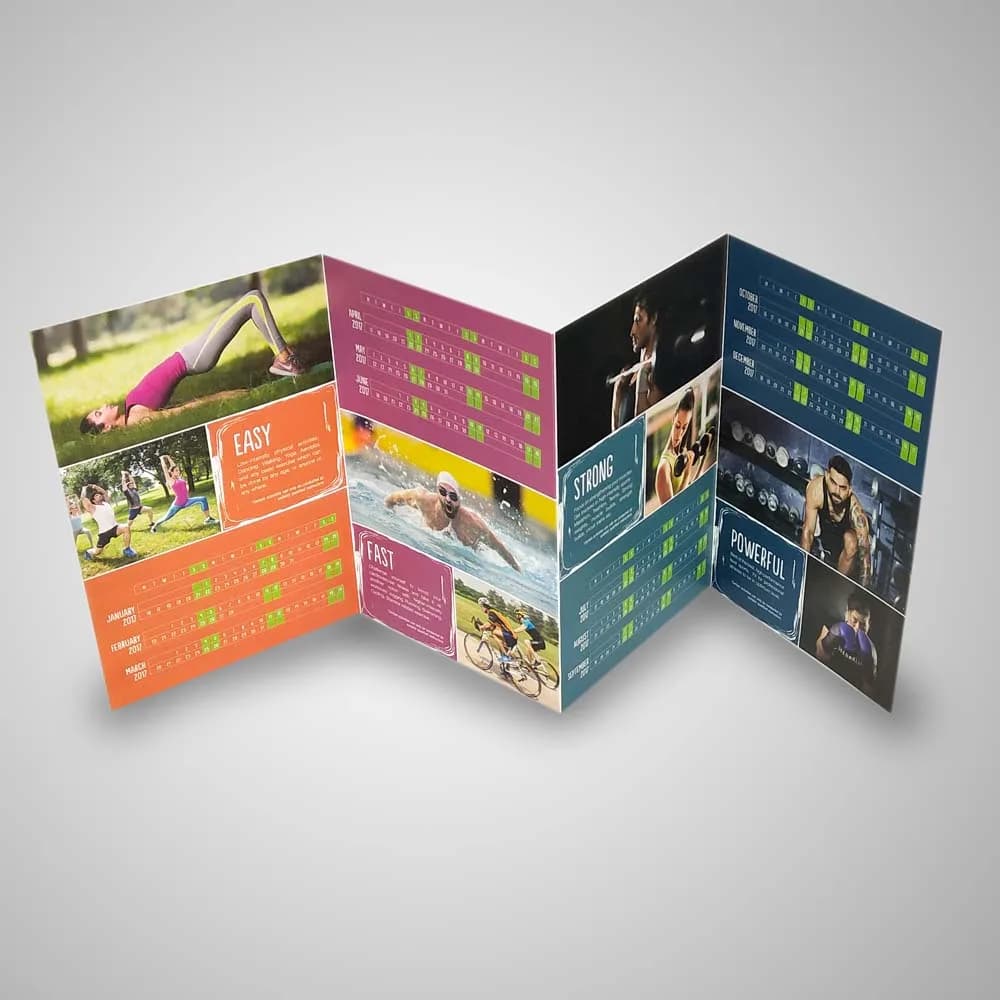
Executive Summary
A brochure persuades. It is short, usually 2 to 16 pages, and selective, and it ends in one call to action. A catalogue is for reference. It is longer, lists the full range with specifications and codes, and is kept for repeated look-ups. Choose a brochure to introduce a product or project, and a catalogue when buyers need to compare and order from a range.
Key takeaways
- Brochure = selective and persuasive. Catalogue = complete and for reference.
- India uses ISO 216 sizes: A4 (210 × 297 mm) and A5 (148 × 210 mm), not US Letter.
- Saddle-stitched books need a page count divisible by four. Past roughly 64 pages, move to perfect binding or section sewing.
- Specify paper by use: heavier covers, 130–170 GSM coated inners for photography.
- Approve a physical proof before the full run if brand colours are critical.
What is the difference between a brochure and a catalogue?
Key Takeaway
A brochure introduces and persuades in a few pages. A catalogue lists the full range with specifications and ordering details, and is kept for reference.
Many businesses need both: a brochure to open the conversation and a catalogue to close the order. The table sets out how they differ.
Related: Brochure printing · Catalogues and lookbooks
| Brochure | Catalogue | |
|---|---|---|
| Job | Introduce and persuade | Inform, compare, and support ordering |
| Typical length | A folded sheet to around 16 pages | 16 pages to well over 100 |
| Content | Selected highlights, story, one call to action | The full range, specifications, codes, ordering details |
| How it is used | Read once or twice, often at first contact | Kept and consulted repeatedly |
| Common formats | DL tri-fold, A4 or A5 bi-fold, short saddle-stitched booklet | A4 or A5 saddle-stitched, perfect-bound or wire-O book |
| Typical user | Marketing team, sales at first meeting, exhibitions | Procurement teams, distributors, retail buyers |
What are the standard brochure and catalogue sizes in India?
Key Takeaway
A4 (210 × 297 mm) and A5 (148 × 210 mm) from the ISO 216 A series, plus the DL tri-fold (99 × 210 mm folded).
India works to the ISO 216 A series, so sizes are given in millimetres. Custom sizes are possible, but they are planned against the press sheet to avoid wasting paper. RoboSouls prints offset on sheets up to 28 × 40 inches.
Related: Standard paper sizes in mm and cm
| Format | Finished size | Common use |
|---|---|---|
| A4 | 210 × 297 mm | Catalogues, company profiles, product brochures |
| A5 | 148 × 210 mm | Compact catalogues, handouts, lookbooks |
| A3 folded to A4 | 297 × 420 mm flat | Four-page brochures with a large inside spread |
| DL tri-fold | 99 × 210 mm folded (A4 flat) | Leaflets, rate cards, exhibition handouts |
| Square, e.g. 210 × 210 mm | Custom | Brand-led brochures and lookbooks that stand out on a desk |
Which paper is best for brochures and catalogues?
Key Takeaway
Coated silk or matte for anything photographic: 130–170 GSM for inner pages and folded leaflets, 250–350 GSM for covers.
Coated stocks hold ink on the surface for sharp detail. Gloss gives the strongest colour but reflects office lighting, so silk and matte are usually more comfortable for a catalogue someone reads at length.
Related: Paper GSM guide · Brochure paper weight
- Leaflets and folded brochures: 130–170 GSM. Crease stock heavier than about 170 GSM before folding, so it doesn't crack along the fold.
- Catalogue inner pages: 130–170 GSM coated.
- Covers: 250–350 GSM, often laminated, because the cover takes the handling.
Which binding should a catalogue use?
Binding follows from page count and from whether spreads need to open flat.
Related: How to design a product catalogue that converts
- Saddle stitch (staples through the fold): up to roughly 64 pages. The page count must be divisible by four.
- Perfect binding (a glued flat spine): longer catalogues that need a printable spine. Does not open flat.
- Section sewn: long catalogues that must open flat and last.
- Wire-O: opens completely flat. Suits technical and reference catalogues.
How do you make sure printed colours match the design?
Key Takeaway
Supply CMYK artwork with 3 mm bleed, specify exact brand colours as Pantone spot colours, and approve a physical proof on the final paper.
A screen cannot show how ink sits on coated versus uncoated stock, so a physical proof on the actual paper is the only reliable check before the full run.
Related: Print-ready artwork checklist
- Build the artwork in CMYK, or convert deliberately and check saturated brand colours, which can shift.
- Where a brand colour must be exact, specify it as a Pantone spot colour rather than relying on a CMYK build.
- Add 3 mm bleed on every edge that has colour or images running off it.
- Approve a physical proof on the actual paper before the full run.
Can brochures and catalogues be printed in small quantities?
Yes. Short runs are usually printed digitally, and longer runs offset, where the cost per copy falls as quantity rises. Which process makes sense depends on quantity, paper and finish. Minimum quantities are quoted per job.
Related: Offset vs digital printing
How can a brochure or catalogue stand out?
Through usefulness first and finish second. A consistent grid makes products easy to compare, and a clear contents page makes a catalogue fast to use. Then add finishes where they carry meaning: soft-touch lamination for a tactile cover, spot UV or foil for a logo, embossing for a premium launch. RoboSouls does foil stamping, embossing, debossing, UV coating and soft-touch lamination in-house.
Related: Spot UV vs matte vs soft-touch
Summary Overview
Decide the job first. If the piece has to introduce and persuade, it is a brochure: keep it short and end on one action. If buyers need to compare and order from a range, it is a catalogue: make it complete, consistent and easy to search. Then specify the size, paper, binding and proofing to suit, and most businesses find they need both.
Frequently asked questions
What is the difference between a brochure and a catalogue?
A brochure is a short, selective piece designed to persuade and lead to one action. A catalogue is a longer reference document that lists a full range with specifications, codes and ordering details.
What size should a catalogue be?
A4 (210 × 297 mm) is the most common catalogue size in India, followed by A5 (148 × 210 mm) for compact ranges and lookbooks.
What GSM paper is used for brochures?
Usually 130–170 GSM coated paper for inner pages or folded leaflets, and 250–350 GSM for covers.
How many pages can a saddle-stitched catalogue have?
Any multiple of four, up to roughly 64 pages. Beyond that, perfect binding or section sewing works better.
How do I make sure the colours match my design?
Supply CMYK artwork with 3 mm bleed, specify exact brand colours as Pantone spot colours, and approve a physical proof on the final paper before the full run.
Can RoboSouls design and print together?
Yes. Design and artwork adaptation are done in-house alongside printing, with delivery across India.
Sources
Technical Consultation
Need specific specifications for your project?
Send us the format, quantity and finish you are considering, and we will come back with a specification and a quote. Lead time is confirmed with the quote.