
Packaging Design Trends in India for 2026: What Works and What Is Hype
Ektta Jain
Founder, RoboSouls •
Executive Summary
The trends with real momentum in Indian packaging are the ones backed by something other than taste. Extended Producer Responsibility obligations under the Plastic Waste Management Rules are changing material decisions because they carry compliance consequences. Interior branding has spread because it is cheap and works. Structural differentiation is growing because visual differentiation has saturated. The trends worth treating sceptically are the ones that are purely aesthetic, because they date, and the sustainability claims that are made on packaging without anything substantiating them.
Key takeaways
- Regulation is now a stronger driver of packaging change in India than aesthetics, and it does not reverse.
- Unsubstantiated sustainability claims on pack are a growing commercial and legal risk, not a free positive.
- Interior branding persists because the economics are unusually favourable — the surface already exists.
- Structure differentiates more durably than graphics, because it is harder to copy quickly.
- Any trend requiring new tooling should be evaluated on how long the tool will stay useful.
1. Regulation Is the Strongest Force in the Room
Key Takeaway
Extended Producer Responsibility obligations for plastic packaging, and restrictions on identified single-use plastics, are changing material decisions because they carry compliance consequences rather than reputational ones.
The most consequential change in Indian packaging over recent years has not come from design at all. Extended Producer Responsibility guidelines for plastic packaging, notified under the Plastic Waste Management Rules and administered through the Central Pollution Control Board, place collection and recycling obligations on producers, importers and brand owners. India also restricted a defined list of single-use plastic items from July 2022. Between them these have pushed material substitution far harder than any consumer preference did, because a compliance obligation has a cost attached and a preference does not. The practical implication for brands is that material decisions should now be made with the regulatory position in view and reviewed as it develops, since the specifics have been amended more than once. Confirm the current requirements for your category rather than relying on a summary, including this one.
2. Sustainability Claims: The Gap Between Saying and Substantiating
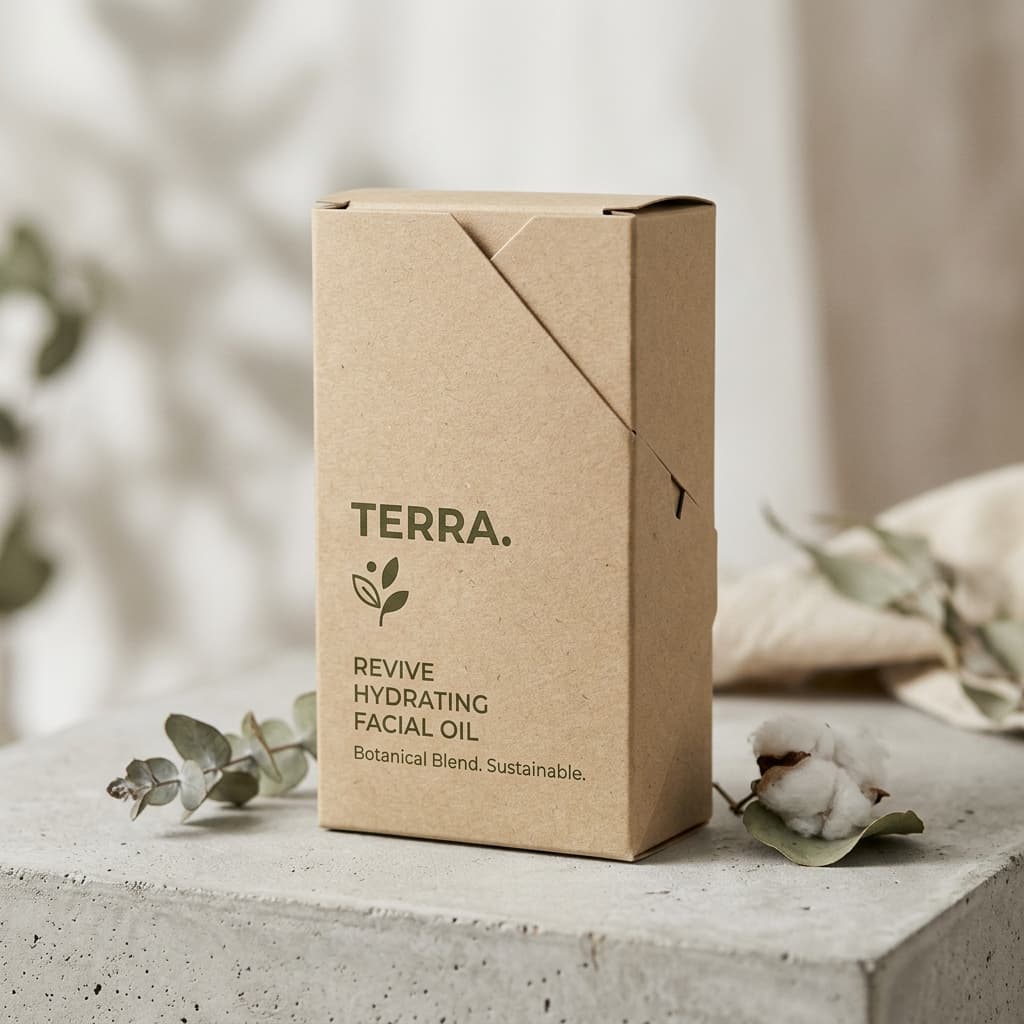
There is a genuine shift toward paper-based and reduced-material packaging, and it is worth taking seriously. What deserves more scepticism is the language printed on the pack. Terms like eco-friendly, green and sustainable have no fixed definition, and using them without something specific behind them is an increasing commercial risk as scrutiny of environmental claims grows internationally. The defensible version is specific and verifiable: a stated material composition, a recognised certification actually held, a measurable reduction against a stated baseline. The indefensible version is an adjective and a leaf icon. It is worth being direct about certification here — schemes such as FSC certify chain of custody and can only be claimed by a certified entity for certified material. A brand should confirm what its supply chain actually holds before putting a claim on a pack, at every step of that chain. For the record, RoboSouls holds no FSC certification.
- State materials rather than adjectives — a composition can be checked, a claim of eco-friendly cannot.
- Only cite a certification if it is genuinely held, and confirm it at every step of the chain of custody.
- Quantify reductions against a stated baseline, or do not quantify them.
- Assume any claim on pack may eventually need to be substantiated.
3. Material Reduction Is Beating Material Substitution
Key Takeaway
Using less packaging is producing more measurable change than switching what packaging is made of, and it is cheaper rather than more expensive.
The more interesting movement is quieter than the material-swap conversation. Reducing box dimensions to fit the product, eliminating void space and removing unnecessary secondary layers cuts material, freight and courier-billed volume simultaneously, and unlike substitution it usually reduces cost rather than raising it. This makes it the rare change with no trade-off to argue about, which is precisely why it has spread through D2C faster than any aesthetic trend. It also produces a genuine and defensible sustainability position, because less material used is measurable in a way that a material claim frequently is not. Where a brand wants to make an environmental case it can stand behind, this is usually the strongest one available to it.
4. The Retreat from Maximalism
Indian packaging spent several years moving toward denser, more decorated, more illustrated surfaces, and there are signs of that reversing at the premium end. Restraint is doing more work: fewer elements, more space, one finishing effect rather than four. This is partly a differentiation mechanic — when a shelf is crowded with decoration, the quiet pack is the one that stands out — and partly a maturation of the premium segment, where accumulated finishing has started to read as trying rather than as expensive. The honest caveat is that this is a premium-tier observation and does not generalise. In mass categories and in festive gifting, density and colour continue to perform, and a restrained pack in those contexts can read as unfinished rather than as confident.
5. Interior Branding Is Not a Fad
Printing the inside of mailer boxes started as a D2C signature and has persisted because the economics are unusually good. The surface already exists; using it costs a print pass rather than a material or a component. It also acts on a genuinely distinct moment — the interior is revealed as the flap lifts, before the product itself is fully visible — and it photographs, which matters wherever customer sharing contributes to acquisition. Trends that survive tend to be the ones where the cost is low and the effect is specific, and this one qualifies on both counts. Expect it to become a default rather than a differentiator, which is itself worth planning for: once everyone does it, doing it well starts to matter more than doing it at all.
6. Structure Is Differentiating More Than Graphics
Key Takeaway
Graphic design can be imitated within weeks. Structural design requires tooling, which makes it a slower thing to copy and therefore a more durable difference.
As printing and finishing have become more widely available, visual differentiation has become easier to match. Structure has not, because it requires a die, a sample cycle and a production route, and that friction is exactly what makes it defensible. Distinctive opening mechanics, layered reveals, inserts that present a product in an unexpected orientation, and boxes that convert into something with a second use all take longer to copy than a graphic treatment. The trade-off is real: structural work carries tooling cost and a longer development cycle, and a structure that is clever but awkward to pack will be quietly abandoned by whoever runs the packing bench. The test worth applying is whether the structure survives contact with the operation that has to use it every day.
7. What to Treat With Scepticism
Not everything presented as a trend is worth acting on, and the failure mode is expensive because packaging decisions carry tooling. A few filters help.
| Signal | Reading |
|---|---|
| Backed by regulation | Act on it — it does not reverse |
| Reduces cost as well as material | Act on it — nothing to trade off |
| Cheap to try, specific in effect | Worth trying — low downside |
| Purely aesthetic, currently everywhere | Wait — it will date, and tooling will not |
| Requires new tooling for a seasonal look | Question it — the tool outlives the trend |
| Claim on pack with nothing behind it | Avoid — the risk is asymmetric |
8. The Question Worth Asking Instead
The most useful discipline in a trends conversation is to ask what problem a change solves for a specific business rather than whether it is current. A brand shipping fragile goods through a courier network has a protection and dimensional weight problem, and the trends worth its attention are the structural ones. A brand competing on a crowded premium shelf has a differentiation problem, and restraint or structure may address it. A brand facing EPR obligations has a compliance problem, and material decisions follow from that. Trends are only useful where they intersect with something a business actually needs to solve — and packaging carries tooling, so following one that does not is more expensive than ignoring it.
Summary Overview
The trends worth acting on in Indian packaging are the ones with something other than taste behind them: regulatory obligation, a cost reduction that comes with the material reduction, or a structural difference that is genuinely hard to copy. The ones to treat carefully are the purely aesthetic — because they date, and the tooling does not — and any environmental claim that cannot be substantiated at every step of the chain that produced it.
Frequently asked questions
What is driving packaging change in India right now?
Regulation more than aesthetics. Extended Producer Responsibility obligations for plastic packaging under the Plastic Waste Management Rules, and restrictions on identified single-use plastic items, carry compliance consequences, which moves material decisions harder than consumer preference does.
Is sustainable packaging worth the extra cost in India?
Reducing material almost always is, because cutting box size and void space lowers material, freight and courier-billed volume at the same time. Substituting materials is a more complex calculation and depends on your category, your regulatory position and whether you can actually substantiate any claim you intend to make.
Can I describe my packaging as eco-friendly?
Only with something specific behind it. Terms like eco-friendly and sustainable have no fixed definition, and unsubstantiated environmental claims carry growing scrutiny. State materials, cite only certifications genuinely held at every step of the chain of custody, and quantify reductions against a stated baseline.
Is interior printing on packaging still worth doing?
Yes, and it is likely to become a default rather than a differentiator. The economics are unusually favourable — the surface already exists, so it costs a print pass rather than a material — and it acts on the specific moment when the box is opened.
Does RoboSouls offer FSC-certified packaging?
No. RoboSouls holds no FSC certification. Any brand intending to make a certification claim on pack should confirm what its supply chain actually holds at every step, because chain of custody claims can only be made by certified entities for certified material.
Should I follow packaging trends at all?
Only where they intersect with a problem your business actually has. Packaging decisions carry tooling and a development cycle, so following a purely aesthetic trend is expensive and the tool will outlive the look. Trends backed by regulation, or that reduce cost as well as material, are the ones that reliably repay attention.
Sources
Technical Consultation
Need specific specifications for your project?
Send us the format, quantity and finish you are considering, and we will come back with a specification and a quote. Production runs to a 72 hour turnaround.